

By Fr. Maurice Kwairanga.
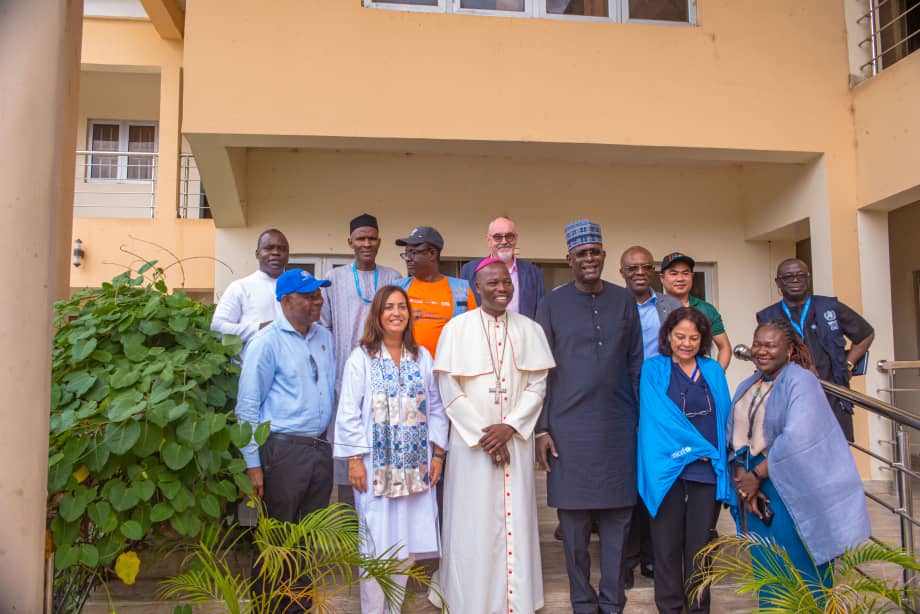
It is a noteworthy occasion when high-ranking officials from prominent international organizations come together to recognize and commend the humanitarian efforts led by local leaders. In this context, the visit of the Resident UN Commissioner, Head of the United Nations Office for the Coordination of Humanitarian Affairs (UN-OCHA), Country Representatives of UNICEF, IOM, WHO, and other Heads of International Non-Governmental Organizations (INGOs) to Bishop Stephen Dami Mamza, the Catholic Bishop of Yola Diocese, signifies a strong endorsement of the invaluable humanitarian work carried out by the Catholic Church in North East Nigeria.
Recognition of Humanitarian Efforts
1. Appreciation and Acknowledgment:
– Bishop Stephen Dami Mamza: His leadership has been instrumental in providing critical support to displaced persons, vulnerable populations, and those affected by conflict in the region. The visit acts as a formal recognition of his efforts and the church’s broader humanitarian mission.
2. Role of the Catholic Church:
– The church has been a cornerstone in offering shelter, education, medical services, and emotional support to countless individuals affected by ongoing conflicts and crises.
– Partnerships with religious organizations often amplify the reach and efficacy of humanitarian aid, leveraging local trust and familiarity.
Charting the Way Forward
1. Strengthening Collaboration:
– Inter-agency Cooperation: Discuss potential areas for enhanced collaboration between the church and international humanitarian bodies, focusing on better resource allocation, coordination, and implementation of aid programs.
– Community-Based Approaches: Develop joint strategies that incorporate the church’s robust local networks to ensure aid reaches the most affected and marginalized communities.
2. Addressing Current Challenges:
– Conflict Resolution and Peacebuilding: Engage in dialogues about peacebuilding initiatives, leveraging Bishop Mamza’s influence to promote reconciliation and conflict resolution within communities.
– Sustainable Development: Explore avenues for introducing sustainable development projects that can support long-term community resilience, beyond immediate relief efforts.
3. Advocacy and Policy Support:
– Human Rights and Protection: Jointly advocate for stronger protections for the rights of displaced persons and affected populations, ensuring that humanitarian policies align with international human rights standards.
– Health and Education Initiatives: Collaborate on new health and education initiatives, particularly focusing on women, children, and other vulnerable groups.
Potential Outcomes
1. Enhanced Humanitarian Reach:
– The combined resources and expertise of international bodies and local religious organizations can significantly enhance the scope and impact of humanitarian aid.
2. Increased Funding and Resources:
– Recognition may lead to increased funding and resource allocation from international donors, further enabling the Catholic Church and its partners to address the region’s humanitarian needs.
3. Elevated Local Voices:
– Elevating the role of local religious leaders in international humanitarian discourse ensures that aid strategies are culturally sensitive and locally relevant.
Conclusion
The commendation of Bishop Stephen Dami Mamza and the Catholic Church’s humanitarian efforts in North East Nigeria by high-level officials from UN agencies and INGOs underscores the critical role that local leadership and faith-based organizations play in humanitarian crises. As they chart the way forward, collaborative efforts promise to foster a more effective, inclusive, and sustainable approach to addressing the region’s complex humanitarian challenges.